This post may contain affiliate links. If you purchase through these links, GlobeDrones.cc may earn a commission at no extra cost to you. This helps support our reviews, comparisons, and guides.
Quick Answer
A drone’s wind rating tells you the maximum wind speed the aircraft is designed to handle with reasonable stability, but it is not a suggestion to fly right at that limit. It is best understood as a warning line, not a comfort zone. Buyers should use wind ratings to compare drones, not to justify risky flying.
What a Wind Rating Actually Means
Wind resistance is usually listed as a speed value in meters per second and sometimes described as a wind-resistance level. In simple terms, it tells you how much wind the drone is expected to tolerate while maintaining controlled flight. Heavier drones and larger creator drones usually handle wind better than tiny mini drones and selfie-style flying cameras.
Why It Matters to Buyers
This spec matters because wind changes the whole flying experience. A drone with stronger wind resistance is better for coastlines, ridgelines, open fields, and elevated viewpoints. It will usually feel steadier, work less hard to hold position, and come home with less stress when the air gets messy.
How to Read the Spec Properly
- Think comparison, not permission: a drone rated for stronger wind is usually safer in marginal conditions than one with a lower rating.
- Leave margin: if the rating looks close to current gusts, it is already too close.
- Remember gusts matter: average wind can look manageable while gusts are what actually cause trouble.
- Weight matters: sub-250g drones can be amazing travel tools, but they are still physically easier to push around.
Real-World Example
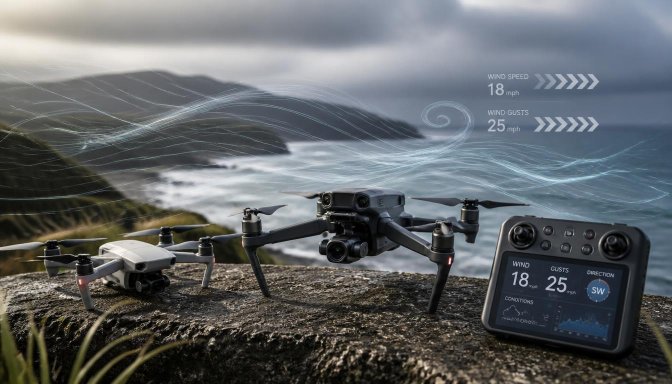
A drone in the Mini class can be surprisingly capable, but a larger model like the Air-class drone usually feels much more settled when coastal wind picks up. That does not mean bigger is always better. It means you should match your drone to your environment instead of assuming a mini drone will feel equally comfortable everywhere.
Common Buyer Mistakes
- Confusing maximum resistance with recommended flying conditions.
- Ignoring gusts and only checking average wind.
- Assuming calm takeoff conditions mean calm conditions farther out or higher up.
- Buying the lightest drone possible for windy destinations.
Final Verdict
Wind ratings are useful because they help you compare stability potential, but they are only one part of the story. The smart move is to buy with margin, fly conservatively, and remember that the safest wind rating is the one you never force to its limit.