This post may contain affiliate links. If you purchase through these links, GlobeDrones.cc may earn a commission at no extra cost to you. This helps support our reviews, comparisons, and guides.
Quick Answer
The safest way to fly around water is to treat it as a high-risk environment. Start with a full pre-flight check, launch from a dry stable surface, keep extra altitude over water, avoid ultra-low passes, and leave a bigger battery reserve than usual. Most importantly, do not confuse “the drone can fly over water” with “the water is forgiving.” It is not.
Why Water Flying Is Riskier
Water creates problems that land flying does not. Reflections can confuse sensors. Spray and mist can reach the aircraft faster than you expect. Wind is often stronger and less predictable near open water. And if something goes wrong, recovery is usually impossible unless you are flying a true waterproof specialty drone.
Best Practices for Safe Water Flights
1. Do a Full Pre-Flight Check
Check battery level, GPS lock, home point, compass behavior, propellers, and weather before takeoff. Over water is the wrong place to discover that something feels odd.
2. Launch and Land Away from Spray
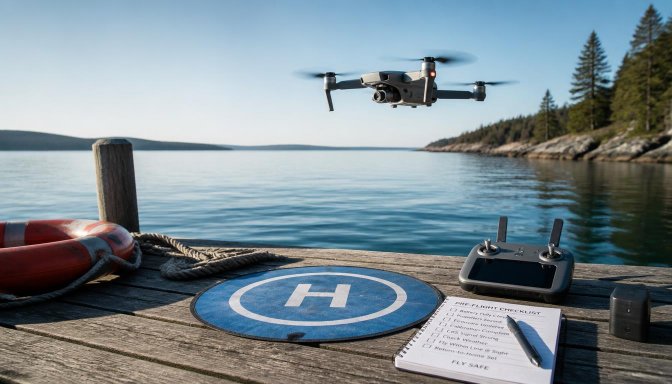
Use a dry stable area like a dock corner, concrete surface, landing pad, or elevated platform. Wet sand, splashing shoreline edges, and unstable boats add unnecessary risk.
3. Fly Higher Than You Think
Many water accidents happen because pilots get tempted by dramatic low skims. The lower you fly, the more vulnerable you are to spray, visual confusion, sudden gusts, and bad depth judgment. Leave more clearance than the shot seems to require.
4. Keep More Battery in Reserve
Water flights deserve a more conservative battery margin. A routine return over land is one thing. A low-battery return over open water, wind, or surf is another. Come home early, not just on time.
5. Respect Wind and Drift
Water often looks calm from a distance while wind higher up or farther out is doing something very different. Always judge wind as if conditions may worsen, not improve.
6. Avoid Overconfidence with Sensors
Do not assume vision systems will behave perfectly over reflective surfaces. Even advanced drones can become less predictable when reflections, glare, or poor contrast are involved.
When a Waterproof Drone Makes Sense
If your flying is regularly centered on boating, fishing, rescue, surf, or marine work, a waterproof specialty drone may be the right tool. Standard camera drones are great near water, but they are not designed to survive immersion or repeated splash exposure.
Final Verdict
Water is beautiful to film and unforgiving to fly over. The safest pilots are the ones who stay higher, launch cleaner, leave earlier, and never assume the water shot is worth pushing a marginal flight.