This post may contain affiliate links. If you purchase through these links, GlobeDrones.cc may earn a commission at no extra cost to you. This helps support our reviews, comparisons, and guides.
Quick Answer
The key to cold-weather drone flying is simple: warm the battery, leave more reserve, fly more gently, and avoid rushing into marginal conditions. Winter flying can produce beautiful footage, but cold temperatures make batteries less predictable and mistakes more expensive.
Why Cold Weather Changes Everything
Low temperatures reduce battery efficiency and can cause voltage to drop faster than pilots expect. That means a battery that looks healthy on the ground can feel weaker in the air. Snow, reflective surfaces, moisture, and sudden weather changes can also make winter flying harder on sensors and electronics.
Best Cold-Weather Flying Tips
1. Keep Batteries Warm Before Flight
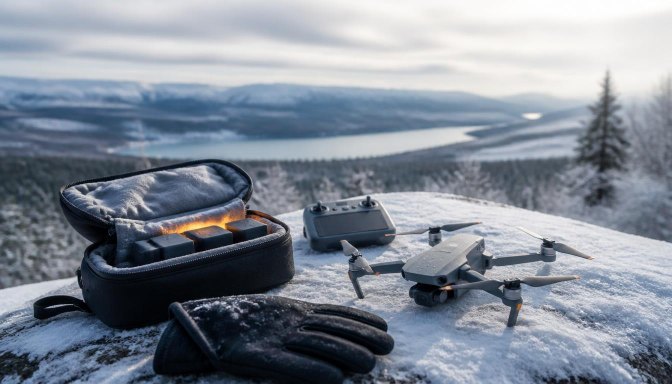
Do not leave batteries sitting in the cold for long periods before takeoff. Keep them protected until you are ready to fly, and remember that warm batteries perform more predictably than frozen ones.
2. Hover Briefly After Takeoff
A short hover after launch helps the aircraft and battery settle into the flight rather than demanding full performance instantly. That extra patience can make the rest of the flight smoother and safer.
3. Leave More Battery Reserve Than Normal
Winter is the wrong time to stretch a pack to the edge. Return home earlier than you would in mild conditions. Cold weather deserves more margin, not less.
4. Avoid Aggressive High-Speed Flying
Sudden full-throttle bursts in cold weather can increase stress on the battery and contribute to sharper voltage drops. Smooth inputs are safer.
5. Watch for Snow, Ice, and Moisture
Snow looks beautiful but can create visual challenges and moisture risk. After flying, let the drone dry and warm gradually rather than sealing damp gear immediately into a case.
6. Store Batteries Properly Between Trips
Battery care matters year-round, but winter neglect makes things worse. For longer storage, keep packs at a healthy mid-range charge level and store them cool and dry rather than freezing or fully depleted.
When Not to Fly
If wind, snow, freezing moisture, and battery anxiety are all arriving together, it may not be a “challenging but doable” flight. It may simply be a bad idea. Winter flying rewards patience more than bravery.
Final Verdict
Cold-weather drone flying is absolutely possible, but only if you treat the battery as the weak link and give yourself more margin everywhere else. The best winter flights happen when you are patient on the ground and conservative in the air.