This post may contain affiliate links. If you purchase through these links, GlobeDrones.cc may earn a commission at no extra cost to you. This helps support our reviews, comparisons, and guides.
Quick Answer
The best racing drone for a new pilot is usually a smaller, cheaper, and more durable quad than the one they first imagine. Real racing drones are brutally fast, highly sensitive, and crash often during the learning process. That means a smart beginner should prioritize training value and repair cost over peak speed.
For most newcomers, the best starting points are micro whoops, small training kits, and beginner-friendly FPV bundles. Jumping directly to a full-power 5-inch racer is the fastest way to get overwhelmed.
What New Racing Pilots Actually Need
- Durability: Crashes are part of the process.
- Manageable power: You need enough speed to learn, not enough to terrify yourself.
- Affordable repairs: Racing is hard on equipment.
- A clear upgrade path: Your first race-oriented drone should help you grow into better gear, not trap you in a dead-end purchase.
Top Picks
BetaFPV Cetus Pro / Cetus X Kits
Best overall beginner racing-style entry
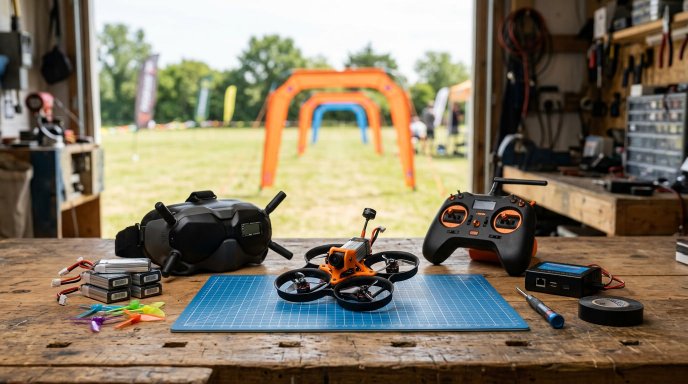
These kits are excellent because they package the learning experience. You get a drone, goggles, and a controller built to work together, along with a much lower barrier to entry than assembling a racing setup piece by piece.
EMAX Tinyhawk III
Best micro racer for learning real control
The Tinyhawk style remains a classic recommendation because it is small, lively, and durable enough to keep you practicing. It feels much closer to true FPV control than a soft consumer drone, while still being less punishing than a larger racer.
3-inch beginner freestyle/race builds
Best next step after basic kits
Once you can handle a micro whoop confidently, a small 3-inch build is often the smartest next move. It introduces more speed and outdoor authority without jumping all the way into a full-size 5-inch race machine.
5-inch race drones
Best saved for later
A true 5-inch racing quad is the eventual destination for many pilots, but it is rarely the best first racing drone. It is louder, faster, more dangerous, and more expensive to repair. New pilots should earn their way into this class.
What To Avoid
- Buying the fastest quad you can afford
- Ignoring repair and parts cost
- Starting outdoors in manual mode without simulator practice
- Assuming consumer FPV drones are the same as race drones
A simulator is one of the smartest accessories a new racing pilot can invest in. It builds muscle memory before real crashes start costing money.
Best Choice By Buyer Type
- Absolute beginner: Start with a ready-to-fly micro kit
- Indoor and backyard learner: Choose a tinywhoop-style platform
- Progressing outdoor pilot: Move to a 3-inch build
- Serious competition goal: Use smaller gear first, then graduate to a 5-inch racer
Final Verdict
The best racing drone for a new pilot is the one that survives the learning process and encourages more practice. In this part of the hobby, durability and progression matter far more than headline speed. Start small, train properly, and let your skills earn the faster machine later.