This post may contain affiliate links. If you purchase through these links, GlobeDrones.cc may earn a commission at no extra cost to you. This helps support our reviews, comparisons, and guides.
Quick Answer
If you are buying your first FPV drone, the best choice is usually not the fastest one. It is the one that makes learning safe, manageable, and fun. For most beginners, the sweet spot is a beginner-friendly kit or a protected cinewhoop-style FPV drone rather than a full-power racing setup.
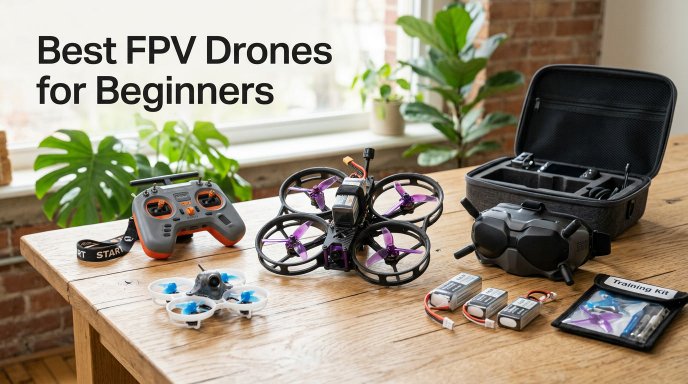
The easiest path is to choose a model with one or more of these strengths: propeller protection, a beginner mode, stable flight assistance, and a complete ready-to-fly package. That is why newer pilots often do best with options like the DJI Avata line for cinematic ease, the BetaFPV Cetus family for training-friendly kits, and beginner-focused micro FPV bundles from brands that make it easy to practice before moving to full manual flight.
What Makes A Good Beginner FPV Drone?
FPV flying is different from traditional camera-drone flying. Instead of standing back and guiding a hovering camera platform, you are effectively sitting in the cockpit. That makes speed, orientation, and control feel much more intense. A good beginner FPV drone has to reduce that intensity just enough for you to build skill without killing the fun.
- Durability: New pilots crash. A lot. Small protected drones survive that learning phase much better.
- Simple setup: Ready-to-fly kits remove the hassle of hunting down compatible goggles, radios, batteries, and chargers.
- Training modes: Beginner and assisted modes help new pilots bridge the gap between hovering and full manual flying.
- Good visibility: A clear live view and low-latency feel make FPV much easier to trust.
- Reasonable repair cost: A beginner drone should not feel financially terrifying every time you bump a gate or a tree branch.
Best FPV Drones for Beginners
DJI Avata 2
Best overall beginner-friendly FPV drone
The Avata 2 is the easiest recommendation for buyers who want immersive FPV flying without diving straight into a complicated DIY racing build. It gives beginners a more polished ecosystem, stabilized footage, and a safer-feeling path into FPV than old-school racing quads. It is expensive, but it makes sense for someone who wants strong video quality and a gentler learning curve.
- Great for cinematic FPV and travel-style immersive footage
- More approachable than a pure racing drone
- Still expensive for a first crash-heavy learning platform
BetaFPV Cetus X Kit
Best FPV training kit for absolute beginners
The Cetus X approach makes a lot of sense because it is built around learning. You get a smaller aircraft, a matched system, and a much lower intimidation factor than large outdoor racing builds. That makes it ideal for beginners who want to practice orientation, throttle control, and gradual progression.
- Excellent first step into FPV basics
- Less intimidating than larger and faster options
- Not the strongest choice for buyers chasing premium footage
EMAX Tinyhawk Series
Best micro whoop style option for skill building
Tinywhoop-style drones remain one of the smartest ways to learn FPV because they are small, durable, and forgiving. The Tinyhawk line has long appealed to beginners who want real FPV handling in a smaller, lower-risk package.
- Great for practicing technical control
- Durable and lower-risk than bigger quads
- Less polished as an all-in-one consumer experience than DJI-style packages
DJI Neo in FPV-style use
Best soft entry for curious beginners
The Neo is not a true racing FPV drone, but it can make sense for someone who wants a lightweight, less intimidating taste of immersive flying and creative motion before jumping deeper into the FPV world. Think of it as an easier on-ramp, not a replacement for a real FPV progression path.
Who Should Buy A Beginner FPV Drone?
A beginner FPV drone makes the most sense for people who want action, immersion, and the feeling of flying through the environment rather than simply filming it from above. If you dream about weaving through trees, diving along ridgelines, or building freestyle skills, FPV is probably the right path. If you mainly want stable landscape shots, a regular camera drone is usually the smarter first purchase.
What To Avoid As A First FPV Purchase
- Overpowered 5-inch freestyle builds if you have never flown FPV before
- Complicated DIY setups if you want instant simplicity
- Cheap no-name kits with poor video transmission and weak support
- Buying for speed first instead of durability and training value
Final Verdict
The best beginner FPV drone is the one that keeps you flying long enough to improve. For most people, that means starting with something protected, approachable, and easier to trust rather than the fastest quad in the category. If you want the most polished premium route, go with a beginner-friendly consumer FPV model. If you want the smartest training-first option, choose a smaller ready-to-fly kit and learn the fundamentals properly.